

This Manta Ray Encounter In The Maldives Broke My Heart — Here’s What I Learned

Discover what really happens during crowded manta ray and whale shark encounters in the Maldives — and how travelers can help protect them.
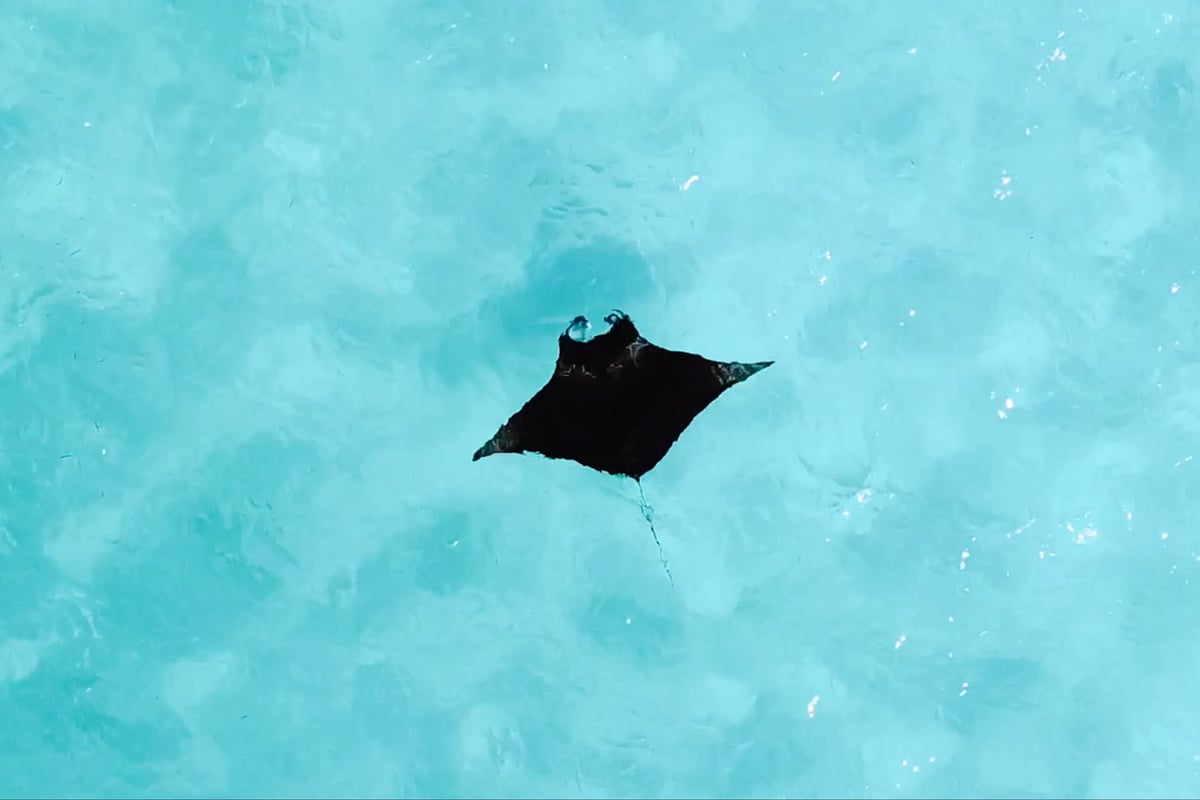
On my last trip to the Maldives, I captured a moment I haven’t been able to shake. It wasn’t from a boat tour or a guided snorkel — I filmed it from shore, watching a lone manta ray glide peacefully through shallow turquoise water. The scene was quiet, almost meditative.
Then, through my drone’s lens, I watched a group of tourists swim towards it.
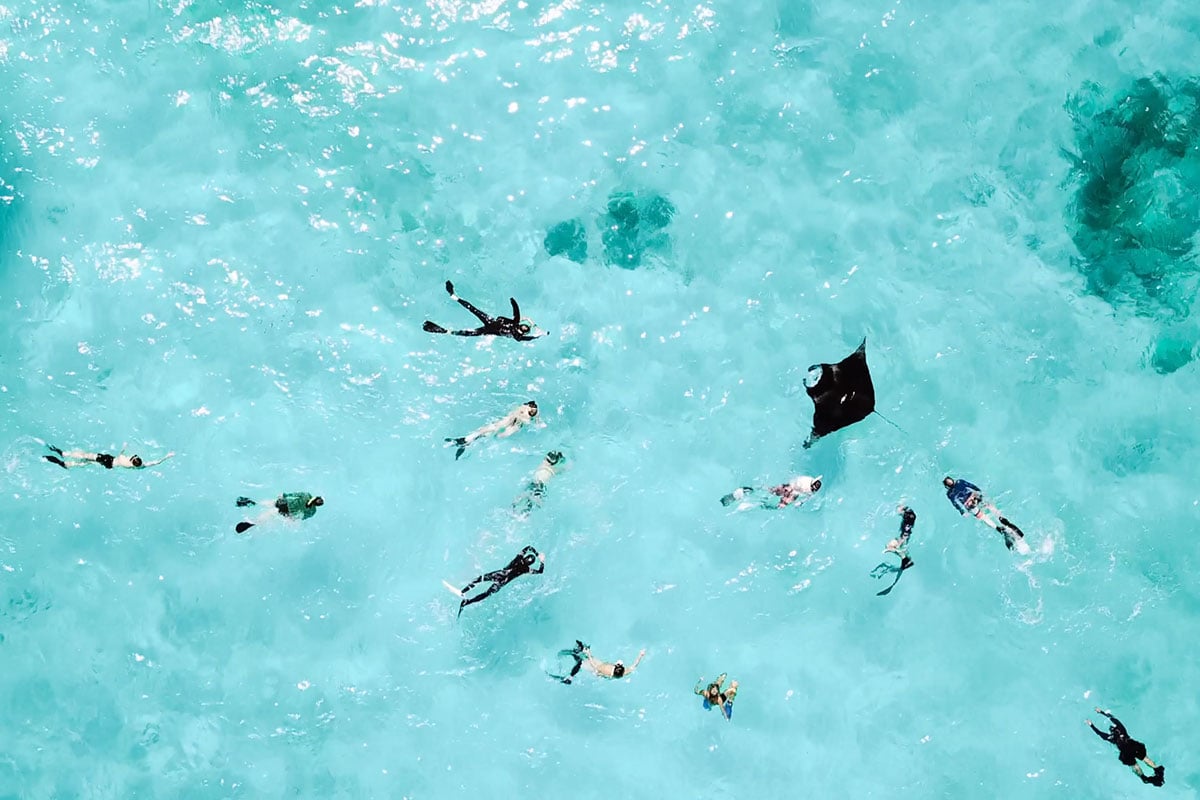
Within seconds, the manta ray went from calm and unbothered to overwhelmed, circling and darting away as more people joined in to get a closer look — and, for some, the perfect photo. From where I stood, it was clear the manta ray was stressed and trying to escape.
This post isn’t meant to shame anyone. It’s meant to help all of us understand these moments better — because what I saw that day broke my heart, and it changed the way I think about wildlife tourism in the Maldives.
Table of Contents
The Nature Of Manta Rays
If you’ve ever been lucky enough to encounter manta rays in the wild, you know how curious and graceful they are.
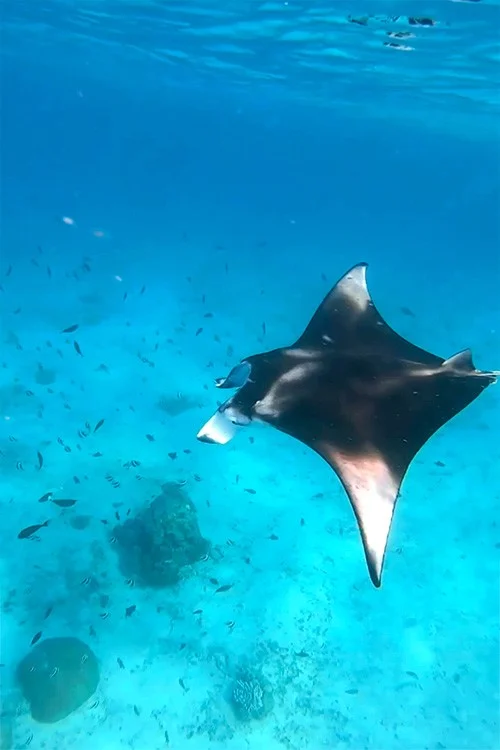
Most of my own experiences in the water with manta rays have been positive — they’ll often glide right past you, or even approach on their own if they feel safe. On a guided night tour in Hawaii, one manta ray kept doing feeding somersaults beneath our float line. I was lying flat on the surface, staying as still as possible, when it began passing closer and closer. Eventually, it brushed gently along my stomach as it looped upward.
I wasn’t encouraging this at all — I just stayed calm and still so I didn’t spook it. For whatever reason, it felt comfortable enough to come that close, and it remains one of the most magical wildlife encounters I’ve ever had.
Manta rays are gentle giants with huge wingspans and even bigger personalities.
But they’re also incredibly sensitive.
When manta rays feel crowded or chased, they:
- stop feeding
- move erratically or circle repeatedly
- waste precious energy trying to get away
- become physiologically stressed
- may eventually avoid that area altogether
These aren’t just behaviors — they’re survival responses.
Read more: Inside The Maldives’ Most Romantic Private Islands
What I Witnessed That Day
The manta ray had started out feeding calmly near the surface. But as more swimmers approached from multiple directions, it became visibly distressed. Each time it turned to escape one group, another was waiting.
No one was touching it (that I could visibly see). No one was being intentionally harmful. But the constant pursuit meant the manta ray couldn’t feed, rest, or glide freely through its own home.
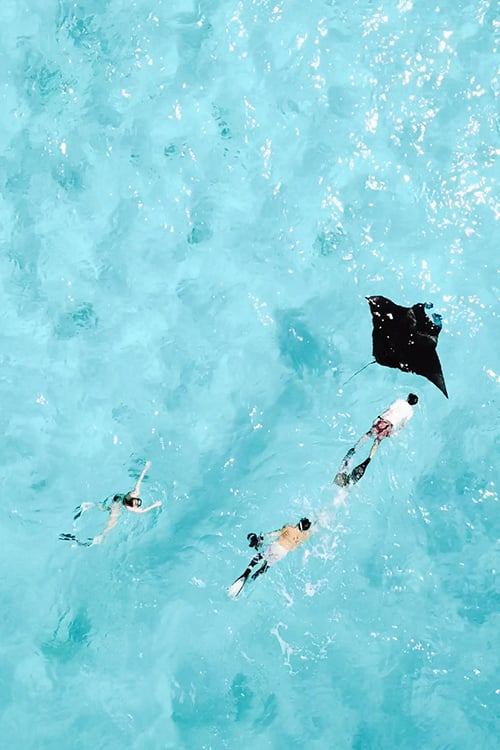
Filming that moment from shore made my heart ache. These are ancient, intelligent creatures who allow us into their world. And so often, we don’t realize how our presence affects them.
Read more: How To Visit The Maldives Sustainably: Resort Stays That Help, Not Harm
Where Tour Operators Can Do Better
I truly believe that tour companies hold the key to more ethical wildlife encounters — especially in fragile ecosystems like the Maldives.
A responsible operator will:
- give proper safety + behavior briefings
- limit the number of people in the water
- enforce no-chase, no-touch rules
- understand manta behavior and know when to back off
Unfortunately, that’s not always the case. Some operators prioritize volume and customer satisfaction over environmental protection — and most tourists simply don’t know any better.
Education is everything.
Read more: The Side Of The Maldives Most Travelers Never See
How Travelers Can Help Protect Manta Rays
If you love wildlife, the best thing you can do is help keep it wild. A few simple practices make a world of difference:
1. Choose Ethical Tour Operators
Look for companies that follow Maldives Manta Trust guidelines, cap group sizes, and emphasize conservation. During my second visit, I joined guided tours with Sun Siyam Iru Fushi, which has a resident marine biologist on staff. Their commitment to educating travelers and protecting wildlife and coral made a huge difference.
2. Give Manta Rays Space
Don’t chase them. Don’t dive down on them. Let them approach you on their own terms.
3. Speak Up Gently When Needed
If you see someone trying to touch or crowd an animal, a kind reminder can go a long way. Most people simply don’t know the impact.
4. Put The Animal’s Wellbeing Before The Photo
The best encounters come from patience, respect, and letting wildlife lead the moment.
This wasn’t the first time I’ve witnessed wildlife encounters go wrong in the Maldives. My whale shark experience off the island of Dhigurah was even harder to watch — and be part of.
There were more than 20 boats crowded around a single whale shark, with over 100 people in the water at once. The moment it appeared, everyone rushed toward it. I was getting kicked in the face, people were diving on top of each other, and the whale shark was constantly trying to avoid the chaos.
I got out of the water quickly and refused to go back in. I had the opportunity to do this tour again on my second visit to the Maldives (with a different operator) and chose to skip it because I didn’t like what I saw on my first visit.
Even though whale sharks and manta rays are gentle, massive, and resilient, they’re also vulnerable to stress and displacement. Tourism, when unmanaged, can overwhelm them.
This is why I don’t encourage people to swim with whale sharks in the Maldives unless they’re doing it with an operator who strictly follows ethical guidelines — and sadly, that’s not the norm in many places.
Read more: Before You Book the Maldives, Read This About All-Inclusive Resorts
Where We Go From Here
I’m sharing these experiences not to shame anyone, but because most people simply don’t realize how much pressure wildlife is under — especially in bucket-list destinations.
The truth is:
Respectful wildlife encounters are absolutely possible.
I’ve had beautiful, calm interactions with manta rays in the Maldives where they swam right up to me because they didn’t feel threatened. Those are the moments we should all be aiming for.
With the right operators, proper education, and a mindset of giving animals space, these interactions can be safe, meaningful, and sustainable — for both travelers and the creatures who call these waters home.
We just have to be willing to choose better experiences, speak up when something doesn’t feel right, and put the wellbeing of wildlife first.
After all, we’re visitors in their home — and they deserve the chance to move, feed, and live freely.
Sign up for my travel newsletter here and be the first to get my best travel advice and secret finds — so you can discover hidden gems, and travel like an insider (not just a tourist).
Flights: Going is the first place I check when searching for cheap flights. If you sign up for their email alerts, you’ll receive flight deals at up to 90% off. I have traveled all over the world using their flight deals.
Accommodation: Booking.com offers savings on hotels, apartments, and villas in 80,000 destinations worldwide. You can browse hotel reviews and find the guaranteed best price on hotels for all budgets.
Travel Insurance: I never travel without a travel insurance policy because it’s not worth the risk! I use and trust Visitors Coverage, which I have used for the past 10 years.
Let me book your trip! Looking for a Travel Advisor to help you plan your trip? Learn more here!
As an Amazon Associate I earn from qualifying purchases. I’m also a member of other affiliate programs. For more info please read my Privacy Policy